

What newer construction really means for the wiring
Westridge and the nearby streets in western Davie, close to Flamingo Road, are home to newer construction compared with the older core of town. In practice, newer means a few specific things. The electrical service is usually larger. The panel has more spaces. There are more circuits, with protective devices in more rooms. Ground wires exist throughout. Smoke alarms are interconnected. Outlets are placed closer together, and kitchens and baths are laid out with modern appliances in mind. All of that is a real advantage over older houses.
It does not mean there is nothing to think about. A newer house is built to a standard that reflects the code and the budget at the time of building. Builders commonly use dependable but basic fixtures, standard outlets and switches, and a standard panel layout. They have to build many homes in a limited time, and they do not know how you will live in yours. So the house arrives with a sensible, minimal setup that fits an average household. Your household may not be average.
Some features of newer construction are worth understanding. Many newer homes use wire methods and devices that are safe when installed well but unforgiving when installed poorly. Fast, efficient production sometimes leaves loose connections at device terminals, wire nuts that are not fully tight, or devices that are not securely mounted in their boxes. These are not common failures, but they are possible, and they show up as intermittent symptoms: a dead outlet, a light that flickers, a switch that is warm. When a newer house has such a symptom, the cause is often a single loose connection, not a systemic issue, and it can be repaired quickly.
Another feature is the use of protective devices. Arc fault and ground fault protection are built into the panel or the receptacles in many rooms. These devices are sensitive. They can trip for reasons that look odd, such as a vacuum cleaner motor or a poorly made charger. A trip is not necessarily a sign of a faulty house. It is a sign that the device saw something unusual, and the task is to find out what.
As time passes, the main questions for a newer home are about additions and adjustments. A garage that gets a charger, a patio that gets a kitchen, a spare room that becomes an office, a back yard that gets a pool. We will talk about each of these in turn. In every case, a conversation by phone starts the process, and any job bigger than a simple repair benefits from a visit to see the actual conditions in your house.
Finishing a house after the builder: the improvements people ask for first
Buyers of newer homes often move in and soon begin finishing. They discover where they wish there were an outlet, a switch, a light or a circuit. The sooner those improvements are made, the more pleasant the house becomes. Here are the changes that tend to come up first.
Lighting is first. Builder fixtures are functional but plain. Owners replace entry lights, dining room fixtures, pendants and bathroom vanity lights, and they add recessed lights or under cabinet lights in the kitchen. Dimmers are installed to set the mood. When changing fixtures, check that the box is secure and rated for the weight, that the wiring is in good shape, and that the new fixture is compatible with any dimmer. Mismatched dimmers and lamps are the leading cause of buzzing and flickering.
Fans are second. Bedrooms, lanais and living rooms benefit from ceiling fans. If the ceiling box was installed for a light only, it must be replaced with a fan rated box that is secured to framing. Many newer homes have fan ready boxes in the bedrooms, but not everywhere. Check before buying.
Outlets are third. The standard layout may leave a gap where you want a lamp, a charging station or a television. Adding outlets is straightforward in unfinished spaces and more delicate in finished walls, where wiring must be fished through. Floor outlets in an open room, outlets in a kitchen island and outlets in a closet for an organizer are common requests. In garages, ceiling outlets for retractable cords and wall outlets at workbench height make a significant difference.
Fourth is outdoors. A patio without an outlet becomes frustrating at the first gathering. Outdoor lighting, ceiling fans on covered porches and receptacles at the back and front of the house are widely requested. Outdoor work needs weather rated devices, ground fault protection and correct covers.
Fifth is storage and utility spaces. Laundry rooms, closets and attic access areas may need lighting and outlets. A home office needs enough circuits for a computer, monitors and a printer. In each case, the question is whether the existing circuit can handle the addition. A house with plenty of capacity at the panel can usually accept new circuits, while one with a crowded panel might need a subpanel.
Whatever you choose, ask about permits. Many of these improvements are minor, but those that add circuits usually require them. The permit office decides at your address, and a trade professional can explain what is typical.
Vehicle charging, garage circuits and what a modern household draws
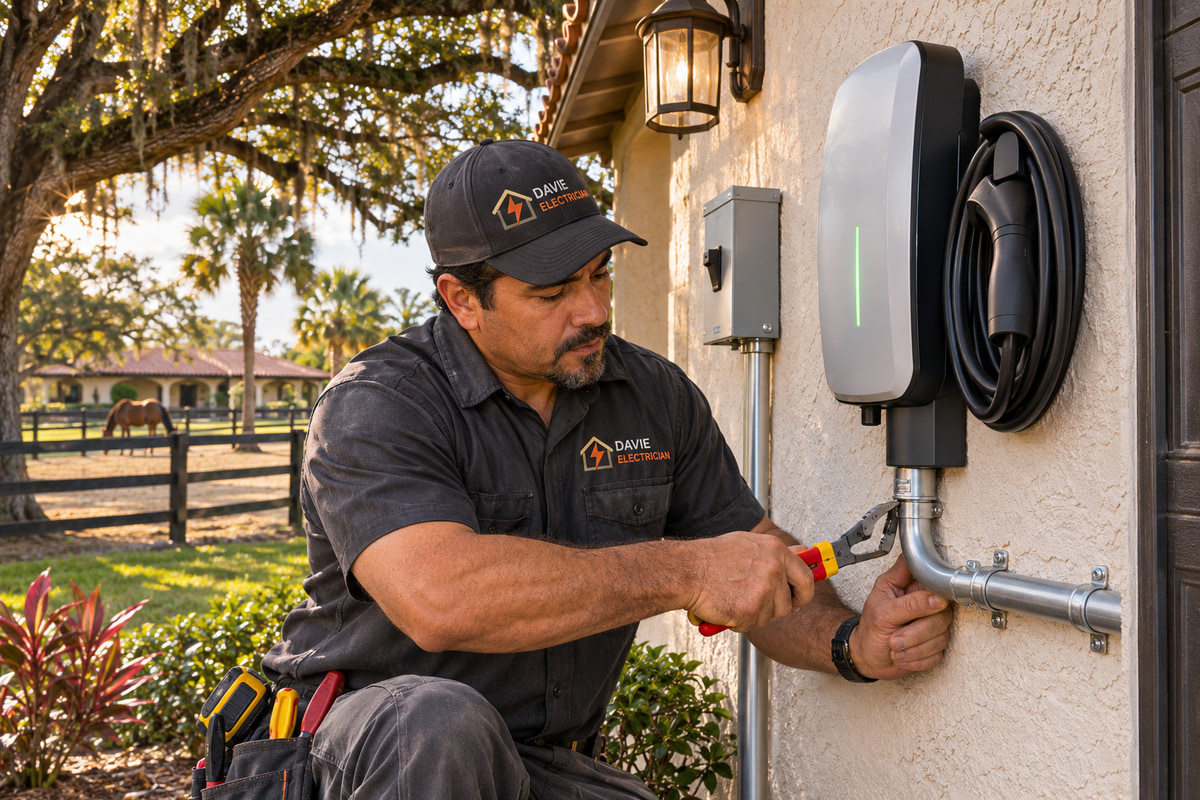
One of the biggest shifts in household electricity is the electric vehicle. Whether you own one now or expect to, the garage is where the planning begins. Charging a vehicle uses a significant amount of power for several hours, and it is a load unlike anything else in a typical home. An ordinary outlet can charge slowly, but it is not meant to carry that load for hours day after day. A dedicated circuit for a charger is the standard approach.
Here is what the conversation looks like. First, we ask what vehicle you have or plan to buy, because charging rates differ. Second, we look at the panel to see how much capacity remains. A modern house with a large service often has room, but a house with a lot of electric appliances, a pool and a big air conditioner may be closer to its limit than expected. A load calculation, done properly, tells you. Third, we look at the route from the panel to the charger location. The shorter the run, the simpler the installation. Fourth, we discuss the charger itself, its mounting location and whether it should be plugged in or hard wired.
Garage layout matters. A charger placed where the cable can reach the vehicle's port without stretching is more convenient and safer than one that forces the cable across the floor. Mounting height, protection from impact and distance from water sources are considerations. Garages here can be humid, and a charger needs a proper enclosure rating.
Load management is a topic worth knowing. Some chargers and systems can adjust the charging rate according to what else the house is using. This can allow charging without upgrading the whole service. Whether it is suitable depends on your household and equipment. The EV charger page on this site goes through the details.
Other garage loads should be considered too. A second refrigerator, a chest freezer, a workshop, a welder, a compressor, a water heater or a sink pump may all want circuits. Designing the garage with a few circuits in mind at once is cheaper than adding them one at a time. A short conversation about your current and future use helps us propose a plan that fits.
A worked example makes the load question concrete. Imagine a household with a large air conditioner, an electric range, an electric dryer, a pool pump and a water heater, all in a house with a standard sized service. On an ordinary evening, several of these run at once. Now add a charger that pulls a steady, heavy current for hours overnight. The total might sit comfortably within the service, or it might not, depending on how the numbers fall. The electrician does not guess. A calculation, based on the nameplates and the house layout, shows the answer, and sometimes the answer is that a charger fits easily, while at other times it means choosing a lower charging rate or upgrading the service. Either way, you learn it before buying, not after the breaker trips at midnight.
There is also the matter of cord and plug chargers. Some owners begin with the portable cord that comes with the vehicle plugged into an ordinary outlet. If the outlet is old, loose or on a shared circuit, the plug can heat. Warm plugs, discolored receptacles and a burning smell are reasons to stop using that arrangement at once. A proper receptacle of the right rating on a dedicated circuit, or a wall mounted unit, is the safe path.
Finally, think about the resale. A garage with a properly installed charger circuit is an attractive feature for future buyers. Done correctly and permitted, it adds value. Done informally, it can become an issue at inspection.
Technology, networks and the low voltage side of a modern home
A newer home is wired for data as much as for power. Cables for internet, television, security cameras, doorbells and thermostats run through walls, ceilings and attics. This low voltage wiring does not carry dangerous levels of power, but it is still part of the electrical system and it benefits from care.
Many builders install a structured wiring panel in a closet or garage, with a central point where cables converge. If your home has one, it is a convenient place to keep the modem, router and network switch. If not, the equipment is wherever the cable entered the house. Ventilation matters. Network equipment generates heat, and stuffing it in a closed cabinet without airflow shortens its life. Put it on a surge protector and consider a battery backup for the modem and router if your work depends on connectivity.
Wireless coverage is a common complaint. A single router in a corner of a larger home may not reach the far rooms. Solutions include wired access points, which need cable runs, or mesh systems, which need power outlets in the right places. Installing a network cable and an outlet in a central spot, such as a hallway or ceiling, makes later improvements easy. If you are building out a home office, running a wired connection to it is far more reliable than relying on wireless.
Security cameras and smart doorbells need power, either from a transformer, a plug or a battery. Wired devices are more reliable than battery ones, but they need a power source near the camera location. Plan outdoor cameras with weatherproof junctions, and avoid long runs of extension cord. A dedicated, protected outlet in a soffit or under an eave is a clean solution.
Smart switches and thermostats are popular. Many require a neutral wire at the switch, which newer homes usually have but older ones may not. Before buying a batch of smart devices, check what each one needs. A mismatch results in flickering, buzzing or devices that do not work at all.
Whole home audio, projectors and televisions mounted on walls need power and signal cables behind the wall. Doing this neatly is a matter of planning: a recessed box behind the television holds the outlet and the cable passes, so that nothing dangles. Cords hanging down the front of a wall are not a good practice, and running power cords inside walls without proper methods is not allowed. Use a recessed outlet kit made for the purpose.
Attic and ceiling access is worth a thought in a house with lots of cable. Wires in an attic in this climate live in intense heat, and cables laid across insulation can be buried and forgotten. When you add a camera, a ceiling speaker or a new network drop, ask that cables be supported, kept away from hot surfaces, and separated from power wiring where practical. A tidy attic makes future work faster, and it keeps rodents from finding easy nests. Our guide on rodent damage describes what chewed cables look like, and why they matter.
Finally, pay attention to the surge side of low voltage equipment. Cable and phone lines can carry surges just as power lines can, and a single strike can damage a modem, a router and a connected television in one blow. Protecting both the power and the data line at the equipment closet is a small step with a large payoff. If your equipment has been replaced after a storm more than once, treat that as a sign that protection is overdue.
Protective devices in newer homes and the trips that puzzle people
A newer home usually has more protective devices than an older one: ground fault protection in kitchens, baths, garages and outdoors, and arc fault protection in bedrooms and living areas. These devices make a house safer, and they also generate calls. The calls are usually variations on a theme: it keeps tripping, and I do not know why.
Ground fault devices detect small leaks of current, usually to ground, as when moisture reaches a wire or an appliance has an internal fault. In a kitchen, a ground fault trip may follow a spill, a leaking appliance or a worn cord. Outdoors, it may follow rain, irrigation spray or a damaged fixture. If a ground fault device trips repeatedly, unplug everything on the circuit and reset it. If it holds, plug devices in one at a time to find the culprit. If it trips with nothing plugged in, the fault is in the wiring, and it needs attention.
Arc fault devices detect patterns that suggest sparking, such as a loose connection, a damaged cord or a nail through a cable. They can also trip in response to normal arcs from motors with brushes, as in vacuums and some power tools. In rare cases, certain electronics cause nuisance trips. The usual approach is to isolate the source, replace worn cords and tighten connections. Persistent trips with nothing plugged in suggest a wiring fault that needs to be found. Our guide on why breakers keep tripping goes through the logic.
Sometimes a trip is related to the weather or time of day. Moist air in an outdoor outlet may cause morning trips that vanish by afternoon. Air conditioner start ups may cause trips when a circuit is on the edge. These patterns are clues. Keeping a log of when and what is happening helps.
Do not bypass or defeat protective devices. Replacing a tripping device with a standard one removes the protection, and it may violate code. If a device is faulty, replace it with the correct type. If the issue is a bad connection, fix it. A protective device that trips is doing its job, and the job of the electrician is to find out what it is protecting you from.
Planning for the next addition without redoing the last one
The best way to handle a growing household is to plan for growth. A modest amount of forethought in the first project makes the second and third easier and cheaper. Here is how to approach it.
First, get a clear picture of the panel. Note the main breaker size, the number of spaces, how many are used and how many remain. Note whether the panel has room for tandem breakers or whether it is full. If you have few spaces left, consider a subpanel or a larger panel when you do your next project.
Second, make a wish list. Include things you may do in the next several years: a charger, a pool, an outdoor kitchen, a workshop, a generator inlet, a solar installation or battery, a hot tub, a second air conditioner. You will not do everything, but listing them helps us see which ones drive the panel size. A pool and a charger together may justify a larger service, whereas either alone may not.
Third, think about conduit. If you are opening a ceiling, a trench or a wall for any reason, ask whether to add a spare conduit or a pull string for the future. A cheap piece of conduit now saves significant digging and patching later.
Fourth, document. Keep a record of all changes, with dates, locations and permit numbers. Take photos of wiring before walls are closed. Label the panel. These steps help the next electrician, and they help you sell the house.
Fifth, talk to us early. A call before buying equipment lets us tell you what the house can handle. We start with a conversation by phone, and for anything beyond a simple repair we recommend a visit so that the plan reflects reality. A quote follows. We do not promise prices or timelines without seeing the work.
Newer homes in western Davie are well placed for the next stretch of years. With a bit of planning, they can accept vehicles, technology and outdoor living without drama. If you are unsure where to begin, call and describe what you have. We will help you set priorities and find the most sensible first step.
What we see around Westridge
- The Westridge community: newer single family homes with larger services and more circuits.
- Western Davie near Flamingo Road: neighborhoods built more recently than the older town core.
- Garages with growing loads: chargers, freezers and workshops joining the panel.
- Homes with structured wiring: network closets and low voltage runs.
Close to Westridge
Arrowhead lies nearby with a golf course setting, and Shenandoah has established pool homes. Our Flamingo Road corridor page covers the larger road running through this part of Davie. The main Davie page gives the full overview.