

A house and its back yard as one electrical system
When people picture the wiring of a single family home, they imagine what is inside the walls. In a neighborhood like Forest Ridge, where pools are common, it makes more sense to picture the house and the back yard as one connected system. Power comes in at the meter, flows into the panel, and then divides: one path runs through the walls to lights, outlets and appliances, while another runs outside to the pool pump, the lights, perhaps a heater, a salt system, a controller and a few outdoor outlets. Each path has its own risks, its own protections and its own habits of failure.
This way of thinking helps when you notice a problem. A breaker that trips each time the pool pump starts is not a house problem. A light that flickers whenever the pool heater turns on points to a shared supply, not a bad bulb. A tingle felt when stepping out of the pool is not a problem to be explained away. It is a signal that something in the bonding or grounding is wrong, and it should be treated as urgent.
Understanding the layout also helps when you plan changes. If you add a spa, a new heater, outdoor kitchen appliances or a cabana with a refrigerator, the load increases on the back yard side. The feeder and panel that serve it must handle the total. In many homes, the pool equipment is fed from a small subpanel near the pad, which is fed by a single breaker in the main panel. If that feeder is stretched too far, it cannot support new items. A load review tells you.
Picture a typical story. A homeowner in a neighborhood like this decides to add an outdoor kitchen beside the pool, with a refrigerator, a grill with an electric starter, a few outlets and some lighting. The plan seems modest. But the existing pool subpanel is already running a pump, a light and a heater, and its feeder is sized for exactly that. Adding the kitchen without checking could push the feeder past what it can carry. The answer might be a new circuit directly from the main panel, a larger subpanel, or a more modest kitchen plan. None of these choices can be made well without looking at the actual equipment, which is why the visit comes before the quote for work of this kind.
The same applies to trees and shrubs. Planting near the pad and the conduit paths changes how easily equipment can be reached, and roots can disturb buried lines. A small sketch of where the conduits run, kept with your records, lets landscapers avoid them. When you hire anyone to dig, whether for a fence, a tree or a new patio, remind them that buried electrical lines serve the pool, the lights and perhaps the irrigation, and that the one call locate service should be used first.
The final aspect is age. Many Forest Ridge homes have been through a number of owners and renovations. The original panel may have been replaced, the pool may have been resurfaced, new equipment may have been added and the wiring to it may have been rerouted several times. Each such change is a possible source of unnoticed problems: a splice in a box that is now buried, a conduit cracked by a root, a bonding wire that was cut and never reconnected. A thorough look at the whole system, house and yard, reveals them.
If you are curious about your home, the first step is a conversation by phone. Describe what you have, how old it is and what has been happening. We will tell you what is likely, and suggest a visit if the situation warrants. A quote comes after that conversation, and larger work is scoped after a look at the actual wiring.
The garage panel and the habits that grow up around it
In many South Florida homes, the main breaker panel lives in the garage. It is convenient, but it is also an exposed location. Garages collect humidity, dust, stored paint and chemicals, shelves of boxes and sometimes a second refrigerator and a freezer. The panel in that environment deserves a regular glance.
Begin with access. There should be clear, level working space in front of the panel, clear of boxes, bikes and storage. If something blocks it, move it now, because the day you need to shut off the main in a hurry is the wrong time to be unstacking shelves. The panel door should open fully. Nothing should hang on or lean against it.
Look at the enclosure. Rust at the bottom edge, stains below, or damp insulation around the conduit indicates moisture. Moisture can enter from a leaking conduit entry, a cracked weatherhead outside or a roof leak running down the wall. Moisture in a panel corrodes bus bars and breakers and can cause tracking and arcing. If you see signs of it, do not open the panel yourself. Have it examined.
Look at the labels. A directory in your own handwriting, updated when circuits change, is one of the most valuable features of a safe home. If the labels are faded, wrong or missing, mapping the circuits is a useful project. An electrician can do it quickly, with a tester, and leave a clean directory. It makes emergencies easier because you know what to switch off.
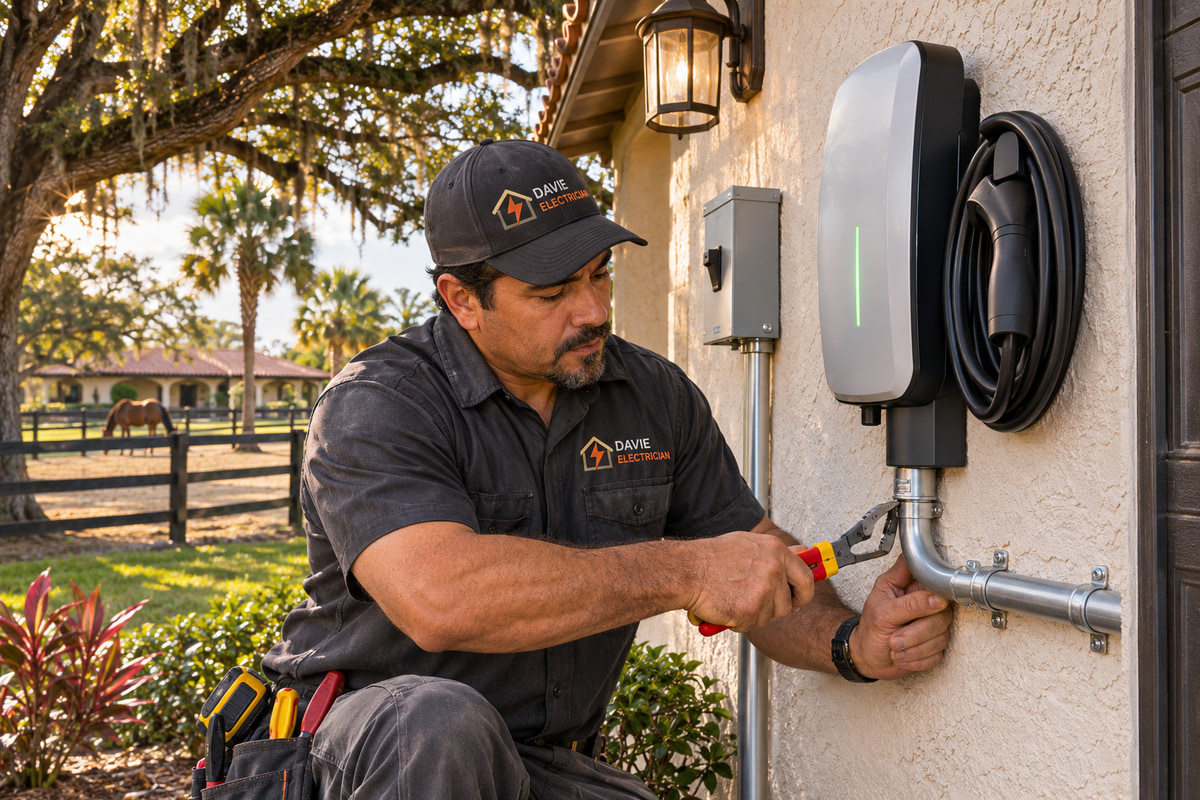
Consider also what the panel serves. Many garage circuits are overloaded because of freezers, workshop tools, chargers, door openers and utility sinks. If you find an extension cord running from a garage outlet to power something permanent, it is a signal that the circuit layout does not match your use. Adding an outlet or a dedicated circuit is better than relying on cords. For anyone considering an electric vehicle charger, the garage panel is where that conversation begins, and our page on charger installation covers it.
Finally, consider protection. Garage outlets generally should have ground fault protection, because garages are semi outdoor, damp and concrete floored. Check that those outlets or their breakers have working test buttons. If they do not, consider adding protection.
The pool equipment pad: pumps, bonding and the reasons for every rule
The pool pad is a small outdoor workshop. A pump moves water, possibly a heater warms it, a filter cleans it, and perhaps a salt cell, a timer and a controller keep everything on schedule. Electricity feeds all of it, in a place that is wet, hot and exposed to chemicals. Rules for pool wiring are stricter than those for general wiring because the consequences of failure are more serious. Water conducts electricity, and a person in a pool is in a very vulnerable position.
Two concepts are central: ground fault protection and bonding. Ground fault protection detects small leaks of current and shuts off power in a fraction of a second. Pool circuits generally require it, and the devices must be tested regularly. Bonding connects all the metal parts around the pool, such as ladders, rails, pump motors, heater cases, light fixtures and reinforcing steel in the deck, so that they sit at the same electrical potential. If a fault occurs, there should be no dangerous voltage difference between things a person might touch at the same time. Bonding wires are small and easy to overlook, and they can corrode or come loose. A visual check is simple.
Common problems at the pad include the pump that hums but does not turn, the breaker that trips at startup, the pump motor that runs hot, corroded terminal connections inside the motor's cover, water in the junction box, and cords that are too short and are strained at the connection. Heaters and control panels have their own failure modes. Sun, rain, humidity and chemicals attack seals and insulation, so fittings need to be inspected.
Pool lights are another focus. A light that trips the breaker whenever it comes on may have water in the fixture, a cracked lens, a failed gasket or a failing transformer. The pool light that trips the breaker every time has its own guide on this site. Do not ignore it, and never work on the light while power is on.
Heat and sun deserve attention at the pad. A pump motor that is constantly in direct sun runs hotter than one in shade, and a simple shade structure or cover, built so that it does not trap heat or block airflow, can extend its life. Motor vents must stay clear of leaves, cobwebs and nests. Wasps and ants are enthusiastic residents of pool equipment, and their nests inside junction boxes cause shorts. Inspect with the power off at the breaker, and use caution.
Timers and controllers are the brains of the pad. A timer that has lost its schedule after a power flicker may leave the pump running all night or not at all. Many modern controllers have battery backup for the clock, and the battery fades with age. If your pool is cloudy and the schedule seems off, look at the timer before blaming the chemistry. A controller that resets itself repeatedly may be reacting to surges or a weak connection.
Finally, think about changes. Adding a heater, an automation system, a salt system or an additional pump changes the electrical load and requires the right protection. Replacing a pump with a variable speed model, which is common, requires attention to the circuit and the controls. The new pump may need a different breaker or a specific type of connection. A visit before buying equipment saves surprises. The pool and spa electrical page covers the subject in more depth, and both pages are written to help you ask better questions.
Aging devices inside the house: switches, outlets, fixtures and fans
Inside a house of this type, the most common electrical wear is at the devices people touch every day. A switch is operated thousands of times over its life. An outlet has plugs inserted and removed constantly. Ceiling fans vibrate, light fixtures heat and cool. These parts wear out, and when they do, they signal it in predictable ways.
A switch that feels warm, buzzes, crackles or fails to hold its position is worn. The contacts inside have degraded, and arcing is occurring. Replace it. A dimmer that gets warm beyond mild warmth, or buzzes loudly, may be loaded beyond its rating or may be a poor match for the lamps. Replace it with the right type. Our guide on wall switches that feel hot to touch explains what is going on in more detail.
An outlet that grips plugs loosely, shows discoloration, feels warm or smells of burnt plastic is another candidate. Loose plug contact creates resistance and heat. Replace worn receptacles, and while you are there, check for backstabbed connections, where wires are pushed into holes in the back rather than wrapped under screws. Those can loosen over time. Using the side screw terminals is more durable. Where ground fault protection is required, install the proper device.
Fixtures deserve a look too. Recessed lights that cycle on and off, a fixture that flickers or bulbs that burn out quickly can indicate heat buildup, loose sockets or voltage issues. The page on bulbs that burn out again and again explains the common causes. Ceiling fans that wobble, click or run slowly need attention. Check the mounting, the blades and the capacitor.
Smoke alarms, too, age. Most units have a limited life, and the date is printed on the back. Replace them when they expire, and test them monthly. In homes with gas appliances or attached garages, carbon monoxide alarms add protection. These small devices are among the cheapest ways to keep a family safe, and they belong in every home.
Do not wait for a device to fail completely. A small repair is much easier than dealing with a fire damaged wall. Make a list as you notice things, and bring the list to the visit so that the work can be done in one trip.
Lighting upgrades are among the most visible improvements. Many homes still have older fixtures with bulbs that run hot and burn out often. Newer lamps use less power and run cooler, which is gentler on sockets and wiring in tight fixtures. When changing lamps, make sure they are rated for the fixture, especially in enclosed globes, where trapped heat shortens life. If a recessed light flickers or shuts off and on, it may be a thermal protection cycle caused by insulation touching the can or by an incompatible lamp. Those are fixable without opening the ceiling in many cases.
Do not forget the doorbell, the garage door opener and the thermostat, three small low voltage devices that make a house feel broken when they fail. A doorbell transformer that has weakened, a garage opener on a loose outlet, or a thermostat with a dead battery or loose wire are easy repairs, and they sometimes reveal wiring problems elsewhere. Our guide on small circuits goes through them one at a time.
Wet season, lightning and the habits that protect a house
Summer in South Florida brings daily storms, and neighborhoods with mature trees and open yards see their share of lightning. The risk is not only a direct strike. A nearby strike can induce a surge on power lines, phone lines and cable, and even on pool and irrigation wiring. Sensitive electronics, pool controllers, garage door openers and air conditioner boards are common victims.
The best protection is layered. At the panel, a surge protective device can absorb much of a surge before it spreads through the house. At the equipment, point of use protectors add another layer for televisions, computers and appliances. For pool and irrigation controls, dedicated surge protection helps. None of this guarantees survival of a very close strike, but it reduces damage. The page on whole house surge protection explains what to look for.
Habits matter as well. During a thunderstorm, avoid using corded appliances or touching plumbing where possible. Unplug sensitive equipment if a severe storm is near and you have time. Stay out of the pool, which is an obvious but important rule. After a storm, check your panel for tripped breakers, look for signs of water in outdoor boxes, and test ground fault devices.
If the power goes out, switch off large appliances to avoid a surge when power returns, and leave a light on so you notice when it comes back. If you use a portable generator, follow the manufacturer's directions, run it outdoors and far from windows, and never plug it into a wall outlet. A professionally installed inlet and transfer switch is the safe way to power a house. Our page on generators and transfer switches explains how.
After a flood or heavy water intrusion, do not touch or reset electrical equipment that was wet. Water damaged panels, outlets and appliances can be dangerous even after drying. Have them inspected and replaced as needed. It is better to be careful than quick in that situation.
A realistic maintenance plan for a house with a pool
A maintenance plan should be short enough to follow. Here is one that suits a single family home with a pool, organized by how often each item should be done.
- Monthly: press the test buttons on ground fault outlets and breakers, and reset them. Check that the pool light, pump and controller behave normally. Walk around the pad and look for water, rust or odd sounds.
- Each season: look inside the garage panel area for moisture or clutter, check outdoor outlet covers, test smoke and carbon monoxide alarms, and examine visible cords and plugs for damage.
- Each year: look at the pool pad connections, the bonding wire, the condition of fixtures on the lanai and the fans. Replace worn parts before the storm season begins.
- Every few years or at a change: have an electrician review the panel and the main components, especially before selling, after a major renovation or after a significant storm.
When you call, tell us the symptoms, the age of the house and what has been added. A simple repair may be discussed by phone. Anything larger is scoped after a visit, because we do not guess at work we have not seen. A quote follows. We do not promise a price before understanding the job.
At the visit, expect a calm, orderly process. The electrician will look at the panel, test the circuits in question and walk the yard if the issue involves outdoor equipment. You will be told what was found, shown if possible, and offered options. Permits are discussed when work requires them, since the local office decides what applies at your address.
Afterward, ask for notes on what was done and keep them with your house records. Update your panel directory. If anything was left for later, mark it on a calendar so it does not drift. A house in Forest Ridge, like any home, serves best when its owners pay a modest, steady attention to the systems that quietly keep it running. That attention is the difference between a surprise failure and a planned, manageable repair.
What we see around Forest Ridge
- Single family homes with pools: pumps, lights and controllers on the back side of the lot.
- Garage panels: main panels in garages that share space with storage and appliances.
- Screened patios: fans, outlets and lights in damp locations.
- Homes renovated over time: original wiring with newer circuits added.
Close to Forest Ridge
Shenandoah and Pine Island Ridge sit near Forest Ridge, and each has its own page with a different focus. The main Davie page gives the wider overview of how the town's neighborhoods differ.