

A Road That Touches Many Kinds of Property
Stirling Road is the kind of road that ties several neighborhoods together rather than defining just one. People who live near it tend to describe the area in terms of what is behind the next turn: a quiet street of single family homes, a townhome community with a shared entrance, a small plaza with a handful of tenants or a stretch of industrial looking buildings with roll up doors. That variety is what shapes the electrical work we are asked to do.
Because we are describing patterns rather than particular buildings, treat everything below as general. Many homes in this part of Davie tend to be concrete block with stucco, built over several decades, which means different generations of wiring may sit side by side on the same street. Townhome and condominium communities tend to have their own rules and shared equipment. Small commercial spaces tend to share services. Where your property fits is something we confirm on site, not something we assume from a map.
One thing the whole area has in common is weather. Summer afternoons bring lightning and heavy rain, hurricane season brings long outages and water, and the humid air works on every connection that is exposed. Where poles and overhead lines are nearby, they add flicker, brief outages and surges when something upstream trips. Electrical equipment that is fine on a clear day is tested a few times a year here, and the weak points tend to show first in the older parts of a system.
People also ask why we start with a visit. The reason is that two properties a block apart can have completely different panels, different meters and different problems. A phone conversation helps us understand the symptoms and decide what to bring, but the only way to say what is happening behind a wall is to look at the panel, trace the circuit and test. That is true for a house, a townhome and a shop alike, and it is why we avoid firm answers on the phone.
The rest of this page is organized by the kind of property you have rather than by street. Find the heading that sounds like you, read that section, then skim the others if you own more than one kind of property. For example, a family that rents out a small commercial unit while living in a house will find useful parts in several sections. If none of them fits, call and describe what you have, and we will work out the right questions together.
If You Own an Older Single Family House
Older houses are where many of the most interesting electrical stories live. A home from an earlier generation might still have its original panel, a mix of grounded and ungrounded outlets, and additions wired by different people at different times. Nothing about age alone means the system is unsafe. What matters is condition, capacity and whether the changes made over the years were done carefully. A thorough look is the only reliable way to tell.
Concrete block walls are common, and they affect how wiring was run. Cables may be buried in plaster or in channels cut into the block, which makes some repairs more involved than the same repair in a wood frame house. Often the practical approach is to avoid opening walls where possible, using attics, soffits, closets and surface raceways to bring new circuits where they are needed. Our page on whole home rewiring explains when it makes sense to replace wiring rather than patch it.
Insurance is a frequent trigger for work. Companies sometimes ask about the panel brand, its age or the type of protection used, particularly when a house is bought, sold or renewed. If you have received a letter or a request for an inspection, read breaker panel or fuse box and why insurers ask, and bring the letter to the visit so we can see exactly what the insurer wants. We can then tell you what is realistic without guessing at the requirements.
Signs that an older house is asking for attention are rarely dramatic. Lights that dim when the air conditioner starts, outlets that feel warm, a breaker that trips repeatedly, a faint buzz from the panel, discolored cover plates or a smell like hot plastic are all reasons to stop and call. Do not open the panel or touch wiring yourself. If you see sparks, smell burning or find water near electrical equipment, call 911 first and keep everyone clear of the area.
Upgrades in older homes go more smoothly when they are planned in an order that makes sense. A house might need a larger panel first, then new circuits for a kitchen, then outlets with ground fault protection near water, and later surge protection and a generator inlet. Doing the foundation work first means later additions have somewhere to connect. We are happy to help sketch a sensible order so the work fits your plans and schedule without wasting effort.
If You Live in a Townhome or Condominium
Townhomes and condominiums add a layer that single family owners do not face: someone else owns part of the system. Typically the association or the building owns the service entrance, the meter bank and the common wiring, while you own what is inside your unit from the panel onward. Where that line sits can vary, and the governing documents are the real answer. Before any work, find out who is responsible for what.
Associations often have rules about who can work in the building, what paperwork a contractor must provide, when work can be done and how contractors enter. Some require notice, a form or approval for anything beyond a simple repair. None of this is unusual, and it does not need to slow the project if you ask early. We suggest contacting the management office before scheduling, and passing along the name of the person who handles contractor access.
Inside the unit, the panel is often in a closet, a utility room or the garage, and the space is tight. Circuits in townhomes can run through shared walls and ceilings, which sometimes makes a problem in one unit show up in a neighbor's. If lights or outlets go dark at the same time in two units, the cause may be in the shared service rather than in either home, and the right first step is to tell the association rather than start troubleshooting yourself.
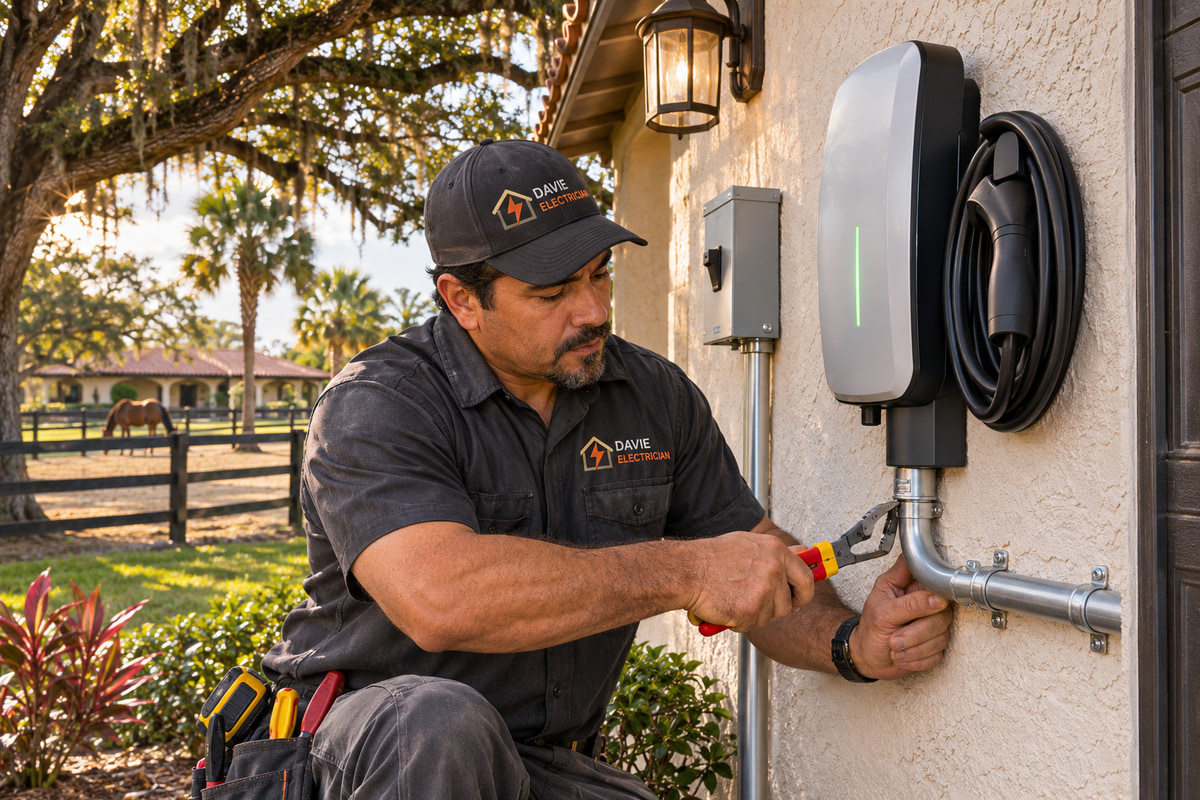
Electric vehicle chargers are a common request in townhome communities, and they raise real questions. Is there a parking spot you control? Can a circuit reach it from your panel? Does the association allow wiring on the exterior? Is the service for the building big enough? Sometimes the answer is straightforward, and sometimes it needs a conversation with the association. Working out what level of charging you actually need before you ask makes that conversation much easier.
Storm preparation is another shared issue. In a community with common lighting, gates or pumps, outages affect everyone, and the association may have a plan. Individually, you can protect sensitive electronics with plug in surge devices, learn where your unit's main breaker is and keep a list of what must stay powered. If you rely on medical equipment, tell your association and your utility early. These steps take little time and make a long outage far easier to manage.
If You Run a Small Business Space
Small commercial units near a busy road are a world of shared walls, shared services and landlord rules. A hair studio, an auto detail shop, an office, a small restaurant or a storage unit with a loading door each puts a different load on the same style of building. Panels may be located in back rooms, shared corridors or outside along a wall, and the labeling can be unreliable after years of tenant changes.
Before adding equipment, ask what the service can supply. Space heaters, commercial ovens, compressors, welders and extra air conditioning units are heavy loads, and a tenant space may have limited capacity. If several tenants share a meter or a main, one unit adding load can affect the others. A short load check before you order the equipment avoids the situation in which a new machine arrives and cannot be turned on. Our page on commercial tenant buildouts and retail electrical work explains how we plan these.
Lighting is another place where small changes matter. Parking lot lights, wall packs, signs and interior fixtures may be on timers, photocells or a landlord's circuit, which means a burned out light in the lot may not be yours to fix. Inside, the choice between fixtures affects glare, heat and how products or workstations look. Work above a ceiling or on a roof often needs special access, so say so when you describe the problem to us.
Hours are a practical constraint. Some businesses cannot afford to have the power off in the middle of a day, and some landlords want work done outside of business hours. We plan around that by splitting work into stages, scheduling shutdowns for a time that suits you and confirming with the landlord. A planned shutdown with equipment turned off in advance goes far better than one that surprises a kitchen or a computer system.
Permits and inspections apply in commercial spaces too, and a change of use or a new tenant improvement may bring additional requirements from the building department. Rules vary, and the details depend on what is being changed. A qualified electrician can help you describe the work correctly so the application is accurate. When in doubt, ask the city or your landlord what they need from you, and bring that information to the site visit so that we plan with the real requirements.
Storms, Overhead Lines and Surges
Lightning in this part of Florida does not need to hit your house to cause damage. A strike on a nearby pole, a tree or a line can send a surge along the wires into every plugged in device on the street. Air conditioner boards, garage door openers, televisions and routers are common casualties, and the damage is not always visible. Appliances may fail days later, long after the storm has been forgotten.
A layered approach tends to work well. A device at the main panel, usually called whole house surge protection, takes the large hit. Plug in protectors near sensitive equipment handle what gets through. Good grounding at the panel and at the service makes both work better. Whole house surge protection is a small project compared with replacing a damaged air handler board or a set of appliances, and it is usually something that can be added to an existing panel.
Outages come next. After a storm, power may come back in bursts, with brief returns and drops that are hard on motors and compressors. Switching off the air conditioner and large appliances until the power is steady can prevent damage. When the power returns, switch things on one at a time. If the lights flicker or buzz after restoration, or if only part of the house is back, do not guess. Call a qualified electrician to check the service.
Flooded areas are special. Water in a garage, around outlets or near the panel means the power should stay off until someone qualified has checked it, even if the water has drained. Moisture can hide inside outlets, switches and wire connections, causing corrosion and shorts later. Never walk into standing water if electrical equipment or cords are in it. If you are unsure whether it is safe, call 911 or the utility first, then call us once it is safe to assess.
A standby generator or a transfer switch makes outages easier, but only when it is installed correctly. Portable generators plugged into a house through a homemade cord can send current back out through the utility lines and put line workers at risk. Our page on standby generators and transfer switches explains the safe options. Plan ahead rather than during a storm, because supplies and installers are busiest right when people want them.
What Happens During a Visit Near Stirling Road
A first visit is mostly looking, listening and measuring. We ask what you have noticed, when it happens and whether anything has been changed recently. Then we look at the panel, the main disconnect, the grounding and the circuit involved. We might test voltage, check connections for heat and open fixtures or outlets that are part of the problem. After that we can explain what we found in plain language and outline the options.
Access makes a difference. In gated communities, tell us how the gate works, or arrange a guest pass. In townhomes and condos, confirm contractor rules with the management office. At businesses, say who will be on site and where the panel is located. If a pet is loose, a garage is full or a key is with a landlord, mention that too. A clear note ahead of time prevents a wasted trip and lets us bring the right tools.
It helps if you can write down your symptoms and take a few photos. A photo of the panel with the door closed, a note of which room lost power, what was running at the time and whether the breaker tripped all help. Do not open the panel yourself or touch the wiring. If something looks burned or smells wrong, switch off what you can safely reach, step away and call a qualified electrician, or 911 if there is any sign of fire.
After a visit, you should receive a plain description of what is needed and why, along with any questions that remain. We separate what must be done for safety from what would be worth improving over time. That lets you decide what to do now and what to plan for later. If a permit is needed, we say so and explain how the process usually works with the city building department.
For work that touches many parts of the system, an inspection can be a useful first step. Our electrical safety inspections give a written picture of the condition of the panel, the grounding and the major circuits, which helps buyers, sellers and owners plan. If you live nearer to Davie Road or University Drive, our pages for those corridors describe the patterns we tend to see along them.
A Simple Way To Get Started
If you are not sure where to begin, start with one sentence. For example, say that a breaker trips when the microwave and toaster run together, or that you are buying a townhome and want to know what the panel looks like, or that your shop needs another outlet near the back door. A clear sentence gives us enough to ask the right follow up questions, and it saves everyone time.
Gather what you can. Photos of the panel, the meter and any labels, a copy of any letter from an insurer or landlord, the name of your association contact, and a short list of what you want to run are all helpful. You do not need exact specifications. If you are replacing equipment, a photo of its nameplate is plenty. If the problem is intermittent, note when it happens, even in rough terms.
Next, think about timing. If the work involves a shutdown, look at your calendar for the days that are least disruptive. In storm season, be realistic about weather delays. If you are buying or selling, share the inspection dates, as they set the pace of the work. We cannot promise a specific day on the phone, because the visit comes first, but we can talk through how scheduling usually works for the kind of project you have.
It is worth a moment to think about the long term as well. A house may need a panel today and a generator in a year. A shop may need a new circuit now and a bigger service later. Planning the first step with the second in mind avoids ripping out recent work. Tell us what you expect to add, even if it is a vague idea, and we will keep it in mind while we design the first phase.
Whatever you are dealing with, we will explain what we find in everyday words and let you decide how to proceed. Safety comes first, and anything that looks urgent should be handled right away. For smoke, a burning smell, sparks or water on electrical equipment, call 911 before anything else. For everything else, tell us about the property and we will talk through the next step and arrange a visit.